Manifesto for the Modern Home

Manifesto via a few of Felix Burrichter’s favorite architects and designers:

Doors should always be floor-to-ceiling apertures, so as to not break up the geometry of the wall. ROGER BUNDSCHUH, ARCHITECT, BERLIN

Never paint your ceilings white if the walls aren’t – it’d be like wearing white socks with a tuxedo. And have at least one mirrored wall in your home. RICKY ClIFTON, DESIGNER, NEW YORK

Consider wall-to-wall carpeting. There’s nothing more amazing than a pattern that looks like it’s going to swallow you up. BETHAN LAURA WOOD, DESIGNER, LONDON

Include inglenooks whenever possible. DAVID KOHN, ARCHITECT, LONDON

Have as many statement pieces as you want. And don’t cover up materials. Just let them be what they are and do what they do best.

FREDRIKSON STALLARD, DESIGNERS, LONDON

When hanging pictures on a wall, a Petersburg or Salon style of hanging should always be counterbalanced with a single, large and preferably abstract piece on the opposite or adjacent wall.

JONSTON MARKLEE, ARCHITECTS, LOS ANGELES

Build, install, hang and arrange everything symmetrically. ETIENNE DESCLOUX, ARCHITECT, BERLIN

Never put a nail into a wall. Always use doublesided tape! Stick it, post it! JüRGEN MAYER H., ARCHITECT, BERLIN

Only buy furniture you plan on having and using for the rest of your life. PHILIPPE MALOUIN, DESIGNER, LONDON

Our culture overuses walls. Put your books, art and plants on the floor in an organized manner. Your place will feel taller and bigger. You will have less space for furniture, but the pieces you keep will be more important in your life. BEN ARANDA, DESIGNER, NEW YORK

Always have a sunken room…always! MATT OLSON, DESIGNER, MINNEAPOLIS

Avoid paper towels. Instead use lots and lots of white washcloths and white dishtowels. Also, drink wine out of crystal, not glasses. In the bedroom, always use cool colours — and no electronics! RAFAEL DE CÀRDENAS, DESIGNER, NEW YORK

Don’t buy the furniture that you think you need, just buy/find/steal good stuff as it comes along. Things need to come trickling in, even if that means that for a while you’ll have three good tables but no chairs. SAM SHERMAYEFF, ARCHITECT, BERLIN

Every home should have a built-in espresso machine that serves professional hot espresso at all times of the day. WINKA DUBBELDAM, ARCHITECT, NEW YORK

Aim for improved indoor air quality and calibrated light levels through non-stop electronic air filtering and doses of 2500 lux. VILLE KOKKONEN, DESIGNER, HELSINKI

Avoid overhead lighting, smartly placed floor and table lamps create a more comfortable home. LEON RANSMEIER, DESIGNER, NEW YORK

Pay attention to RCP (reflected ceiling plan), which is all the stuff that goes on your ceiling. SO–IL, ARCHITECTS, NEW YORK

Don’t confuse a House with a Home. Instead, try to create a Houme (House X home). Architects design Houses but people live in Homes. DOMINIC LEONG, ARCHITECT, NEW YORK

Organize your possessions into piles, climb on top and read important books while enjoying the view. ANDREAS ANGELIDAKIS, ARCHITECT, ATHENS

Always hire an architect or a designer. ASHE + LEANDRO, ARCHITECT, NEW YORK

The writer is an architect and the founder of PIN-UP Magazine, based in New York.


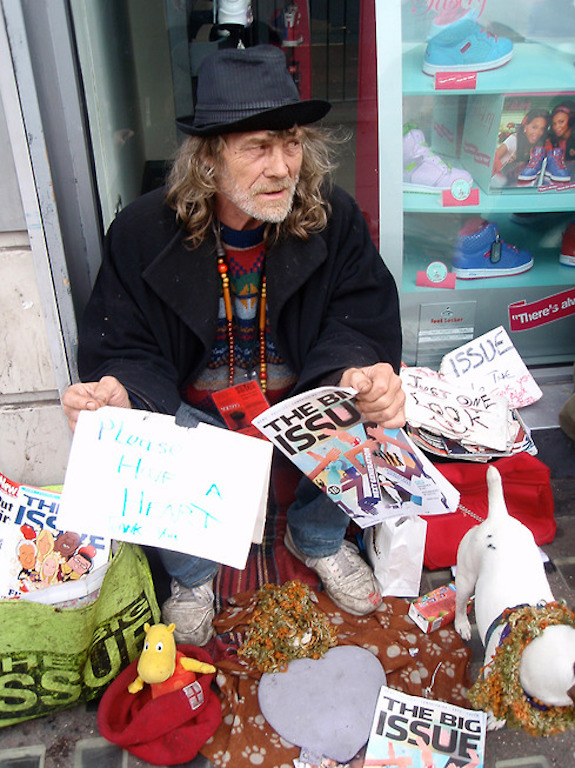
Jani Leinonen: Kerjäläiskyltit (Beggar signs) (2009–)

Jani Leinonen: Kerjäläiskyltit (Beggar signs) (2009–)


Viaggio verso a Casa

MILAN – MARCO VELARDI

As I was growing up during my teenage years in Italy, I’d always imagine that having my own home would be such a natural and straightforward thing. Like something you would graduate to after going to university – purely a matter of passing a final test and there you would be, sitting in your living room reading a book from your carefully organized and dust-free bookshelf, cooking tasty recipes out of an endlessly filled fridge and having a wonderfully loving cat who wouldn’t scratch any of your record covers. Well, probably this wasn’t my exact picture of life as a grown-up, but I was definitely ignoring a lot of the things that I would later have to come to realize.

After all, finding a place that you can call home is not that easy a task, and it doesn’t come without a good dose of mistakes and possibly a few headaches. It took me three years, a painful breakup and lots of self-questioning, but in the end there I was, sitting in an empty flat wondering how to fill it without spoiling the freshly painted walls. I realized that I didn’t really own much besides way too many boxes cramped with books and magazines, a mobile phone and an old laptop – still no bookshelf or fridge in sight. I wasn’t ready for the idea that the apartment would begin to get older. That, after time, the walls would show the signs of their inhabitants, that plants could get overwatered and die from one day to another. I always questioned whether it was me being careless, or if everything that was happening was just the slow daily process of transforming a house into your own personal space. And even if thought I had it all sorted in my mind and I was making room for tiny errors here and there, I realized I wasn’t even close to the bigger picture until last year, when all of a sudden it was two of us calling these four walls a home. Life as I knew it completely changed, toothbrushes became two, mugs multiplied, and breakfast in the morning didn’t taste the same anymore: it was actually much better. I slowly rearranged life around our new formation, and it got me thinking of all the new unexplored aspects of life I didn’t even know existed. A home is both fun and exhausting, it involves a lot of sharing and giving, but more than that, it is an endless possibility of journeys, which is what makes it special for me.

The writer is the editor-in-chief of the magazine Apartamento and a creative consultant at his own design agency SM Associati in Milan.


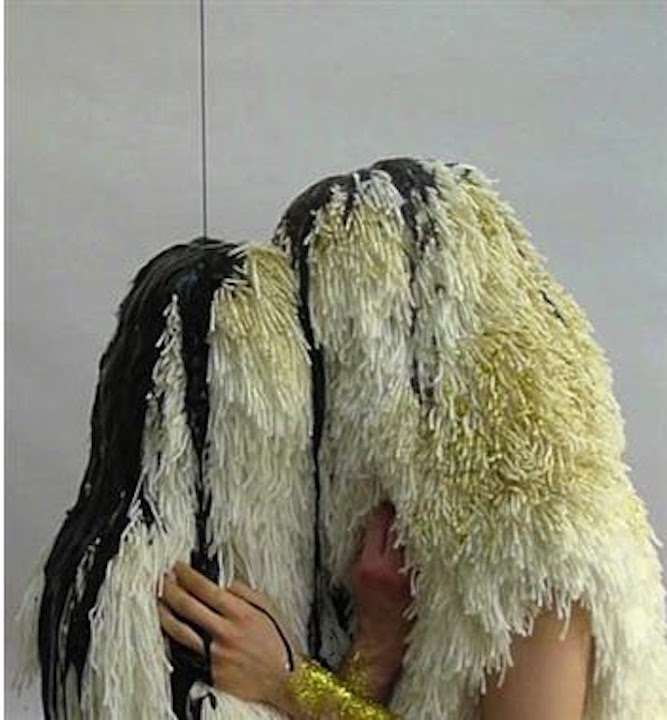
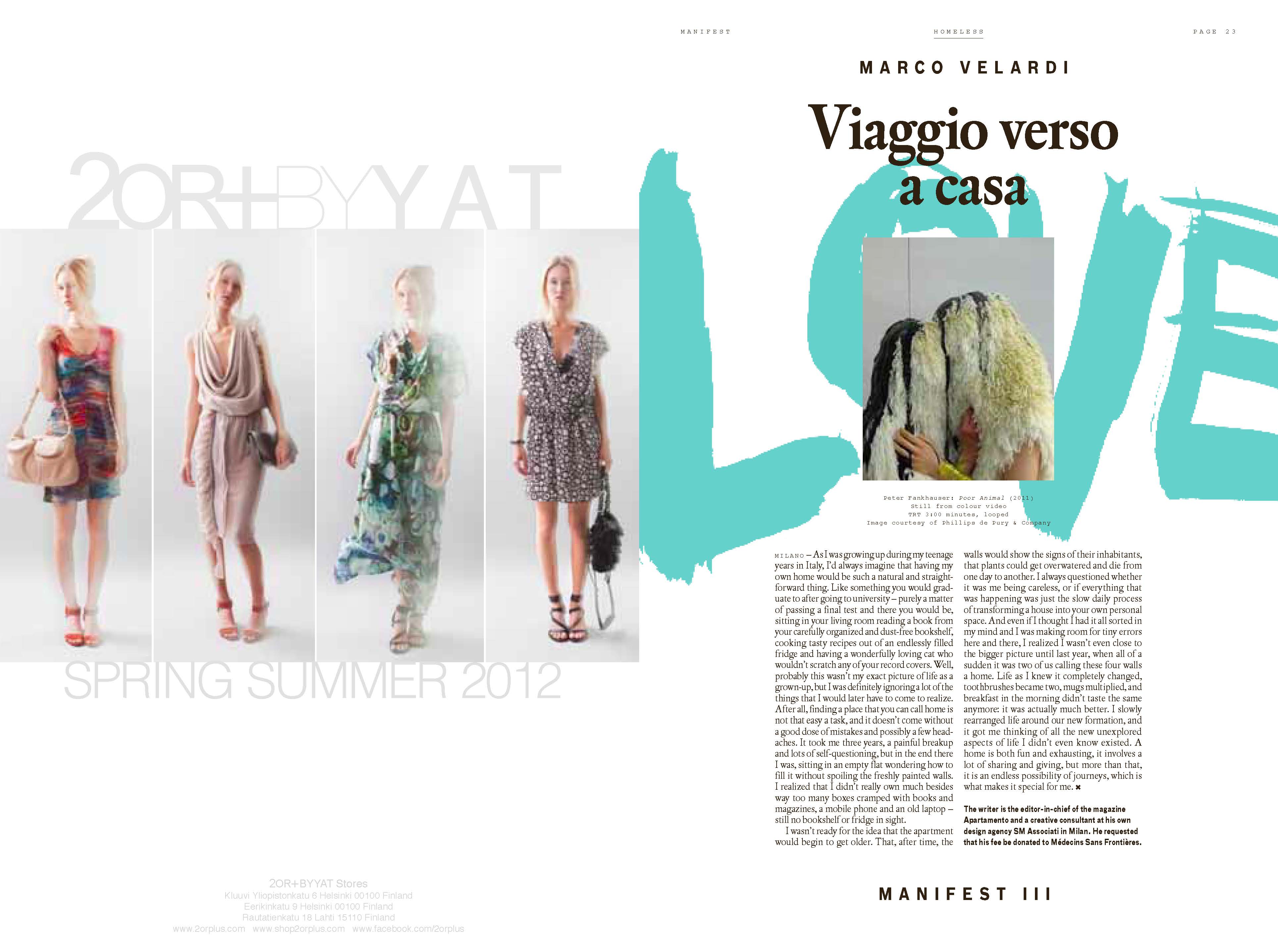
Peter Fankhauser: Poor Animal (2011) Still from colour video TRT 3:00 minutes, looped Image courtesy of Phillips de Pury & Company

Peter Fankhauser: Poor Animal (2011) Still from colour video TRT 3:00 minutes, looped Image courtesy of Phillips de Pury & Company


Stack Them!

BY MARK KIESSLING – Unlike the bookshelf, a pile of books is rather demanding, aggressive and always in flux.

It keeps loitering on your desk, stands in your way, gets dusty and conceals titles you may have been looking for some time or may have long forgotten. A good pile of books will keep you busy. It can be a spark of inspiration and will always remind you of something you were about to do or have done.

Going through a good pile of books is perfectly pleasurable and never a waste of time.

Since I am in the business of future readings, piles of books influence my life more than ever. I have never been a very orderly person, but since running do you read me?! it really exceeds acceptable levels. They are everywhere. Piles of samples. Piles of review copies. Piles of printed matter that promote the ones to come. Piles of readings that we decided not to include in our range, which have found their way to us nevertheless. Piles of titles that I have put aside for myself. Piles of treasures that I gathered when researching other bookstores. There are beautiful piles of books with an almost architectural appeal, and then there are ugly ones. Some you long for to go through, and some you want to get around.

Mark Kiessling is founder and co-owner of the magazine and bookstore »do you read me?! in Berlin, Germany.


An Edible Urbanism

BY DAN HILL

Last summer, Helsinki witnessed two culinary insurgency movements in quick succession. One was fixed in space and had the outward appearance of an elegant van parked outside Lasipalatsi. The other was fixed in time, manifesting itself as a distributed festival of pop-up restaurants, sudden flashes of inspiration appearing and disappearing on a single day. Each would hint that a new city was emerging.

The first was the Camionette, a mobile créperie that – by not being a sanctioned “grilli” or “kioski” (i.e. local street food vendor) – suggested an entirely new kind of street food, and street life, in the city.

The second incursion was Restaurant Day. This started with a small group who were frustrated at the paperwork required to start a café in Helsinki. So they set themselves the lowest bar possible; they simply declared that a certain day would be Restaurant Day and anybody could open any kind of restaurant anywhere on that day. And that’s what happened.

From frog’s legs to flat whites, the city’s food palate expanded radically. But more importantly it reimagined the use of public space, demonstrating to Helsinki’s citizens what their streets could do. Although the resulting ’restaurants’ were right at the edge of the City’s legal boundaries, if not well over, there was little the City could do about it.

For one thing, there was barely any organization there. Restaurant Day is essentially a set of instructions, and you can hardly arrest a set of instructions. It’s a demonstration of the power of an emergent urbanism, enabled through social media and platform thinking, driven by an appetite for participation at the hyper-local level.

The only problem with Restaurant Day is The Day After Restaurant Day. It’s as yesterday never happened, and here we see the limits of the intervention, of the tactic as opposed to the strategy; it is too transient and variable to change a system. The original motivation – addressing the inabilty to easily set up a café – has not been addressed.

But can we see these examples of emergent urbanism as ’lead users’, indicating what a diversifying Helsinki needs to be? Street food is interesting precisely because it is a carrier for cultural change, through its highly visible quotidian accessibility, and the wider systems it sits within, ultimately touching most aspects of modern life. The shift from cold, impassive “grilli”, designed for heavy drinking and poor eating in darkness, to the colour, verve and diversity of Restaurant Day is both profound and explicable.

If we were to write a manifesto for a more resilient Helsinki, would street food give us a platform for prototyping systemic change within the city? Can every day be Restaurant Day? And more strategically, can we use street food systems to sketch a more sustainable Helsinki, with a more active street life, strong service culture and start-up scene, and a diverse set of cultures at play?

As unlikely as it may seem, rethinking the humble hot dog might just unlock a new kind of urban design, centred on citizens, culture and replicable systemic change rather than concrete one-offs.

Dan Hill is Strategic Design Lead for Sitra.


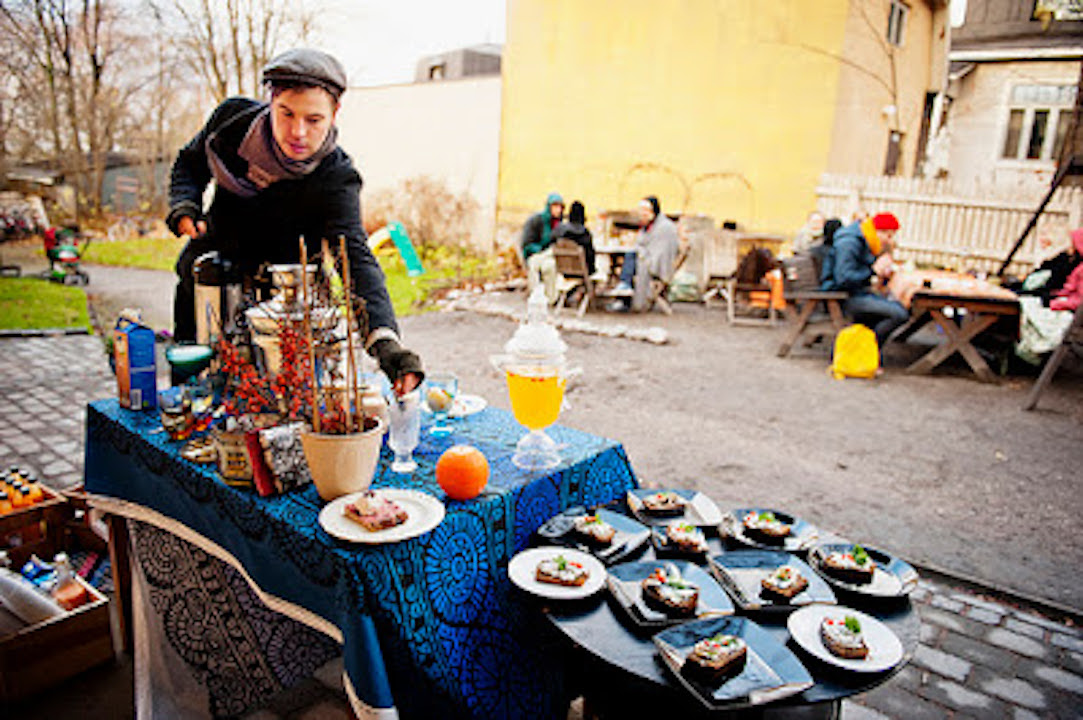
Helsinki Restaurant Day, Photography by Heidi Uutela.

Helsinki Restaurant Day, Photography by Heidi Uutela.

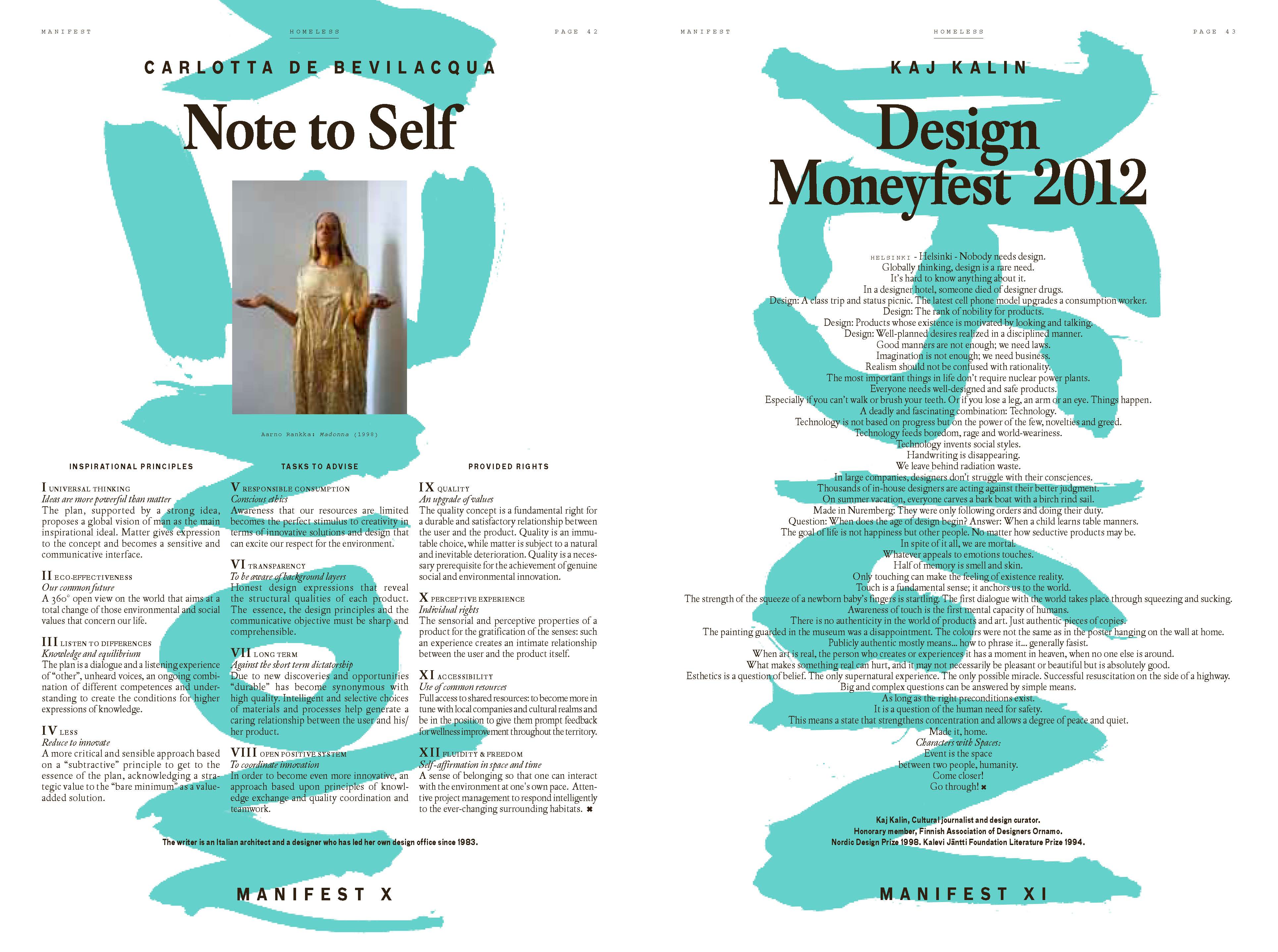
Design Moneyfest 2012

BY KAJ KALIN – Nobody needs design.

Globally thinking, design is a rare need.

It’s hard to know anything about it.

In a designer hotel, someone died of designer drugs.

Design: A class trip and status picnic.

The latest cell phone model upgrades a consumption worker.

Design: The rank of nobility for products.

Design: Products whose existence is motivated by looking and talking.

Design:Well-planned desires realized in a disciplined manner.

Good manners are not enough; we need laws.

Imagination is not enough; we need business.

Realism should not be confused with rationality.

The most important things in life don’t require nuclear power plants.

Everyone needs well-designed and safe products.

Especially if you can’t walk or brush your teeth.

Or if you lose a leg, an arm or an eye. Things happen.

A deadly and fascinating combination: Technology.

Technology is not based on progress but on the power of the few,

novelties and greed.

Technology feeds boredom, rage and world-weariness.

Technology invents social styles.

Handwriting is disappearing.

We leave behind radiation waste.

In large companies, designers don’t struggle with their consciences.

Thousands of in-house designers are acting against their better judgment.

On summer vacation, everyone carves a bark boat with a birch rind sail.

Made in Nuremberg: They were only following orders and doing their duty.

Question: When does the age of design begin?

Answer: When a child learns table manners.

The goal of life is not happiness but other people.

No matter how seductive products may be.

In spite of it all, we are mortal.

Whatever appeals to emotions touches.

Half of memory is smell and skin.

Only touching can make the feeling of existence reality.

Touch is a fundamental sense; it anchors us to the world.

The strength of the squeeze of a newborn baby’s fingers is startling.

The first dialogue with the world takes place through squeezing and sucking.

Awareness of touch is the first mental capacity of humans.

There is no authenticity in the world of products and art.

Just authentic pieces of copies.

The painting guarded in the museum was a disappointment.

The colours were not the same as in the poster hanging on the wall at home.

Publicly authentic mostly means… how to phrase it… generally fasist.

When art is real, the person who creates or experiences it has a moment in heaven,

when no one else is around.

What makes something real can hurt,

and it may not necessarily be pleasant or beautiful but is absolutely good.

Esthetics is a question of belief. The only supernatural experience.

The only possible miracle. Successful resuscitation on the side of a highway.

Big and complex questions can be answered by simple means.

As long as the right preconditions exist.

It is a question of the human need for safety.

This means a state that strengthens concentration and allows

a degree of peace and quiet.

Made it, home.

Characters with Spaces:

Event is the space between two people, humanity.

Come closer!

Go through!

Kaj Kalin, Cultural journalist and design curator. Honorary member, Finnish Association of Designers Ornamo. Nordic Design Prize 1998. Kalevi Jäntti Foundation Literature Prize 1994.


By TIINA ALVESALO

TWO DIFFERENT HOMES FAR AWAY FROM EACH OF OTHER.BOTH WITH THE PURPOSE OF GIVING COMFORT. BOTH MEANT FOR JUST SPENDING MOMENT THERE AND THEN RETURNING TO SOMETHING PERMANENT.

TEMPORARY HOUSING IN JAPAN’S EARTHQUAKE AREA

Last spring the tsunami that hit Japan swept over the harbour town of Onagawa, destroying the whole town centre in a matter of five minutes. The people there lost everything.

Architect Shigeru Ban, renowned for using recycled materials and cardboard paper tubes, wanted to help the victims of the earthquake. Ban is known for his earlier humanitarian work in, for example, Haiti, Japan’s Kobe and Turkey.

Now Ban has built temporary housing for nearly 200 families. A total of 188 apartments were built into nine buildings. A library and an art hall were designed for collective use.

All of the building materials were recycled or recyclable. The temporary apartments were built out of containers piled on top of each other and held up by steel poles. The Finnish company UPM ProFi took part in the reconstruction work by donating deck composite made of recycled material to Ban’s project. It was used for building the interior corridors and 30-meter-long terraces outside the houses.

The apartments have one to three rooms, electricity, gas and plumbing. Two colours have been used in the terrace decking to show which way the doors open and where it is safe for children to play.

Shigeru Ban, where did you get the idea for using recycled cardboard paper tubes for temporary houses?

“I used paper tubes for the first time as an alternative material for wood, which is generally expensive, in 1986 when designing the scenography of an Alvar Aalto exhibition.”

What is the most important thing that must be taken into account when designing and using paper tubes?

“How to combine the shape of the tube and the structural system in design.”

What kind of feedback have the people living in the temporary houses given?

“Warm as wood.”


BY TIINA ALVESALO

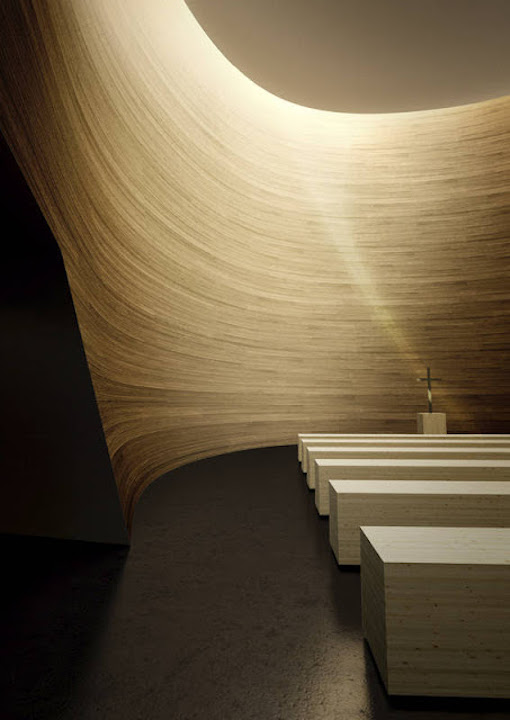
The Chapel of Silence built in the middle of the busiest section of Helsinki offers comfort to those who need it the most, regardless of creed and wallet size. The chapel is open from morning to evening, and visitors can meet employers of both congregations and social services there. Questions are answered about anything from bus schedules and spiritual matters to how to seek help for the problems of homelessness.

The chapel is simple in design. It is built of wood and has a sculptural form. It is a place where people and an important theme for World Design Capital 2012 meet: permanent improvement of the cityscape through service design. The chapel is one of those design year monuments that will remain a part of the Helsinki city landscape.

Mikko Summanen, why did you want to build a chapel in the middle of the busiest city center?

”The aim was to create an alternative to the restless buzz and the commerciality of the city.”

What did you need to take into account?

”We wanted to design a humane building.”

How do you think citizens experience the building?

”The chapel brings order to a busy square and reorganizes the space so that it becomes more functional.”


Photo: Arkkitehtitoimisto K 25, All the rights reserved 2012

Photo: Arkkitehtitoimisto K 25, All the rights reserved 2012

Founder & Editor-In-Chief Tiina Alvesalo, Published by Artek


Written on maalis, 15, 2012 by in , , ,

Written on helmi, 27, 2012 by in

Anti-Mafia Tour in Palermo, SnapShot Photography, 2012 Tiina Alvesalo

Written on tammi, 11, 2012 by in ,


Artek esittelee Alvar Aallon 1930 -luvulla suunnittelemat metallijalkatuolit, jonka istuimet ovat taivutettua vaneria. Näiden harvinaisten klassikoiden alkuperäinen tarkoitus oli edistää terveyttä.

Modernismin pioneeri Alvar Aalto (1898-1976), yksi Artekin perustajista suunnitteli rakennukset pienempiä yksityiskohtia myöten, jossa sisustuksella oli yleensä tärkeä rooli osana arkkitehtuurista kokonaisuutta.

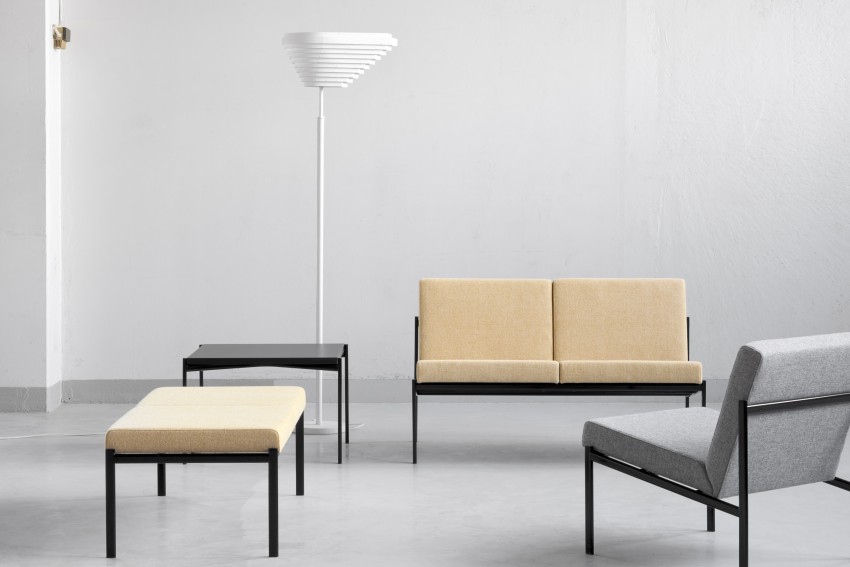
Artekin metallituolikokoelma käsittää Alvar Aallon tuoli 23:n, nojatuoli 26:n sekä Aino Aallon suunnitteleman sohvapöydän 606:n. Pariskunta suunnitteli huonekalut alun perin osaksi Paimion tuberkuloosiparantolan sisustusta.

Aalto ymmärsi jo varhaisessa vaiheessa, että hyvässä muotoilussa kiteytyy hyvinvoinnin merkitys. Aallon lähtökohtana metallijalkatuoleja suunnitellessa oli se, että huonekalut toimisivat itsessään parantavina ja terveyttä edistävinä elementteinä. Hän yhdisti työssään funktionalismin muotokielen ja inhimillisen lähestymistavan.

Uuden designin mahdollisuuksia käytettiin myöhemmin Aallon ”standardisointi ajattelussa”, jolla tarkoitettiin laadukkaiden, kohtuuhintaisten suomalaisten huonekalujen valmistusta teollisesti laajemmalle kuluttajakunnalle.

Aallon funktionalismin filosofian mukaisesti metallijalkatuolit ovat riisuttu kaikista turhista yksityiskohdista. Kauniin yksinkertaisuutensa ja käytännöllisyytensä takia ne sopivat erittäin hyvin sekä yksityisiin että julkisiin tiloihin.

Artekin metallijalkatuolikokoelma yhdistyvät Aallon omaperäinen funktionalistinen muotokieli ja ainutkertainen materiaali, taivutettu vaneri.

Artek lanseeraa metallijalkaisen tuolin, nojatuolin ja sohvapöydän. Tuolien jalat ovat maalattua putkimaista terästä. Metallijalkatuolien puumateriaali on suomalaista koivua.

Teksti: Tiina Alvesalo

Written on tammi, 11, 2012 by in ,

ARTEK Kiki, Text by 2012 Tiina Alvesalo, Photo Artek.

Artekin tuoteperheen Kiki edustaa Tapiovaaran ajatonta ja oivallisen pelkistettyä tyyliä Artekin tuoteperhe kasvoi viime vuonna, kun Ilmari Tapiovaaran suunnittelemat tuotteet tulivat osaksi sen valikoimaa. Artek esittelee nyt Tapiovaaran Milanon Triennalessa kultamitalilla 1960 –palkitun Kiki –tuolin.

Huonekalumuotoilija ja sisustusarkkitehti Ilmari Tapiovaara (1914-1999) oli jo nuorena parikymppisenä rohkea kosmopoliitti, joka pyrki kansainvälistymään varhaisessa vaiheessa. Tapiovaaraan vaikuttivat Aallon ja Artekin Nils Gustav Hahlin ajatukset muotoilusta. Ajatuksena oli, että suunnittelijan tehtävä oli luoda inhimillisesti ja henkisesti rikasta ympäristöä.

Alvar Aallon jälkiä seuraten hän tavoitteli suunnittelussa modernistista ja humaania asuin- ja työympäristöä. Tapiovaara halusi suunnitella laajoille sosiaaliryhmille suuria määriä edullisia huonekaluja. Hän hyödynsi sodan jälkeen niukkoja materiaaleja kuten massiivikoivua siirtyen myöhemmin 50 –luvulla kehittämään monikäyttöisiä tuoleja teräsputkista ja vanerista.

Vuonna 1960 Ilmari Tapiovaara suunnitteli monikäyttöisen Kikin alun perin tuoliksi, joka pinottavuutensa takia sopi myös suuren väkijoukon käyttöön esimerkiksi

auditorian tuoliksi. Kiki –sarjan ajaton ja pelkistetty muotokieli sekä monipuoliset käyttömahdollisuudet ovat tehneet siitä erään käytetyimmistä julkiskalusteista Suomessa.

Kikissa Tapiovaara toteutti aikaisemman orgaanisemman muotokielen sijaan suoralinjaisempaa ilmaisua. Puumateriaalin sijaan hän käytti tuolin raamina kromipäällysteistä putkimaista terästä.


Kiki –tuolissa yhdistyy ajalle tyypillinen pelkistetty muoto ja ainutkertainen käytännöllisyys.

Kikistä muodostui valtava menestys ja siitä muodostui laajemminkin suunnannäyttäjä aikakauden huonekalusuunnittelulle. Tapiovaara osoitti Kikin suunnittelussa, että kaikki ratkaisut olivat jälleen kerran loppuun saakka tarkkaan mietittyjä.

Kikiä on saatavan mustana, valkoisena ja kromin värisenä sekä eri verhoiluvaihtoehdoissa. Tuoteperheeseen kuuluu myös Kiki lounge -versio.

Teksti: Tiina Alvesalo


Written on tammi, 11, 2012 by in ,

ARTEK Lento Lounge by Harri Koskinen, Text 2012 by Tiina Alvesalo, Photo Artek


”Lento Lounge –kalusteista on rakennettu arkkitehtonisia yksilöitä, jotka sopivat moneen erilaiseen ympäristöön. Mielestäni tuotesarja on onnistunut sen positiivisen anonyymiteettinsä takia,” pohtii Harri Koskinen.

Lounge edustaa pohjoismaisesta modernismistä kumpuavaa hienovaraista muotokieltä. Koskinen on suunnitellut järkeviä, perusteltuja ja ehdottoman tyylikkäitä ratkaisuja.

Harri Koskinen (s.1970) on oman tiensä kulkija. Hänessä yhdistyy kansainvälisesti menestynyt suunnittelija ja maalaispoika, joka sai kipinän muotoiluun vasta aikuisiällä. Harri Koskinen asui lapsuutensa ja kävi lukion alle viidentuhannen asukkaan kunnassa Keski- Suomessa sijaitsevassa Karstulassa. Hänen isänsä oli maanviljelijä ja äiti perushoitaja.

Koskinen kiersi 16 -vuotiaana setänsä mukana ympäri Lappia rakentamassa mökkejä. Hän rakensi hirsistä kokonaisia mökkikokonaisuuksia ja purki hirsikuormia. ”Se oli lukiolaisella varsin rankka kokemus. Työmaalla työmoraali oli korkea, koska setäni vanhan kansan kirvesmies. Siellä ei istuttu hetkeäkään. ”

Koskinen pyrki ja pääsi lopulta Lahden muotoiluinstituuttiin opiskelemaan. Siitä alkoi Koskisen matka maailmalle. ”Helsinki merkitsi minulle kuitenkin vielä siinä vaiheessa elämää aivan liian suurta paikkaa asua!”


 Ura lentoon

Mökin rakentajan uran jälkeen opiskelut Lahdessa ja sitten myöhemmin Taideteollisessa korkeakoulussa avasivat Koskiselle mahdollisuuden nähdä mitä muotoilu ja kulttuurihistoria todella merkitsee. Hänelle avautui alan ymmärrys, kun hän oppi, näki ja kuuli tärkeitä suunnitteluhistorian esimerkkejä.

Koskinen kertoo, miten Suomessa ja maailmalla elettiin silloin nuorten muotoilijoiden renessanssikautta. ”Suhteeni Artekiin syntyi vuonna 1997, kun pidin Vesa Damskin kanssa näyttelyn Artekin Espan myymälässä.

Minut kutsuttiin lopulta seuraava vuonna Milanon designviikoille nuorten suunnittelijoiden töitä esitelevälle Salone Satelite -osastolle.”

Milanosta Koskinen sai kutsun järjestää näyttely Issey Miayken galleriaan Tokioon, joka toteutui lopulta 2000 -vuoden lopulla. Tämä oli hänen ensimmäinen oma ulkomailla pidettävä näyttely. Samaan aikaan se oli hänen ensimmäinen yksin tehty ulkomaan matka.

Koskisen saamat kansainväliset toimeksiannot lisääntyivät ja yhteydenottoja tuli myöhemmin lisääntyvissä määrin. Koskinen perusti oman suunnittelutoimiston vuonna 2000, jossa työskentelee tälläkin hetkellä projektista riippuen 3-6 henkilöä. Vuoden 2011 lopussa Harri Koskinen nimitettiin Iittalan muotoilujohtajaksi.


Ruokahistoriallinen ponnistus

Koskinen on tehnyt pitkään edistämistyötä puhtaan suomalaisen ruoan puolesta, joka on luonnollinen jatkumo muotoilijan elämäntavalle. ”Ruoka-aineet on laajan aihepiirinsä ansiosta mielenkiintoista tutkittavaa. Niiden tematiikka avaa myös paljon uusia näköaloja.”

Hän on yksi Eat&Joy Maatilatorin osakkaista, joka vastaa myymälöiden suunnittelusta ja konseptin kehittämisestä. Helsingin Kluuvin kauppahalli on ruokahistoriallinen ponnistus. Yli 600 neliön myymälätilassa avautuu laaja valikoima suomalaisten pientuottajien huippuraaka-aineita sekä pientuottajien lähiruoka- ja luomutuotteita.

Myymälän sisustus edustaa Koskisen omaleimaista ja eleetöntä muotokieltä. Aallon jakkarat ovat yhdistetty hilpeästi talonpoikaiskalusteisiin ja moderneihin myymäläelementteihin. ”Ne viestittävät universaalilla tavalla puhtaan ruoan puolesta.”


Lento on jatke Artekin olemassaololle

Lento on Koskisen Artekille suunnittelema projekti, joka alkoi jo vuonna 2006 pöydän ja tuolin suunnittelulla. Nyt hän sai toimeksiannon Artekilta jatkaa Lento –sarjan kehittelyä.

”Tavoitteenani oli alun perin suunnitella mahdollisimman kevyt ja huokea puinen kalustesarja. Nyt lanseerattava Lento –lounge -sarja on jatkumo tälle suunnittelulle. Artekin olemassaolon idea on puiset huonekalut, joten lähdin purkamaan teemaa ja pohtimaan miten saadaan puiseen pikkutuoliin ja -pöytään uutta nostetta. ”

Koskinen kertoo, mikä Lento –lounge -sarjassa on erilaista verrattuna muihin olemassa oleviin loungetuoleihin. ”Tuoli vastaa erittäin hyvin käyttötarkoitustaan. Siinä on loistava istua.”
Lento Lounge edustaa Koskisen mukaan ennen kaikkea visuaalista tuotetta tilassa. ”Lounge -sarja on hyvä graafinen kokonaisuus, mutta toisaalta se on miellyttävällä tapaa myös anonyymi.

Takana on pitkä ja monipuolinen kehittelyvaihe. Koskinen on kehittänyt kalustesarjaa Artekin omistamassa tuotantotehtaassa, missä uusi teknologia ja joustava tuotantoketju ovat suunnittelijalle valtava voimavara.

”Se antaa mahdollisuuden kehittää tuotetta joustavasti suunnittelijan näkökulmasta. Tämä on tehtaan ensimmäinen tärkeä tuotekehityshanke ja se myös inspiroi meitä kaikkia luomaan uutta.”

Koska Lento -kalusteissa on tavallista vähemmän komponentteja, myös niiden hinta on edullisempi. Koskinen kertoo, päätyneensä siihen, että jalkarakenne on ristimäinen. ”Yksi ja sama puriste. Yksi komponentti on jalka ja toinen on istuin osa. Vähemmällä osia, tuolia ei pysty rakentamaan.”

Lennon juju on hyvin yksikertainen. Ideana on kehittää puukalusteissa alas istumisen nautintoa. Tuotteen käyttöympäristöä ei ole myöskään tarkoin määritelty.

”Lento –kalustesarjan ideaa voi olla verrata myös Aallon klassikoihin, jotka sopivat mahdottoman hyvin joka ympäristöön”, summaa Koskinen.

Teksti: Tiina Alvesalo

Written on tammi, 11, 2012 by in ,

ARTEK Wooden Chair Collection, Text by 2012 Tiina Alvesalo, Photo Artek.

Artek esittelee legendaarisen puutuolikokoelmansa, joka on myös ideologinen kannanotto kohti parempaa ja onnellisempaa arkea. Kokoelma käsittää Alvar Aallon, Ilmari Tapiovaaran, Harri Koskisen, Ben af Schulténin ja Eero Aarnion tuoleja, jakkaroita ja nojatuoleja.

 Artekin alkuperäiset arvot – pitkäkestoisuus, hyvä design yhdistettynä harmoniseen muotokieleen ovat puutuolikokoelman ytimessä. Kokoelma käsittää mm. Alvar Aallon 1930 -luvun tunnettuja klassikoita, Tapiovaaran 50 –luvun yleistuoleja ja Koskisen uuden lounge –tuolin.

Puutuolit symboloivat Artekin alkuperäisiä arvoja ja tavoitteita ”edistää nykyaikaista asuntokulttuuria.” Taidolla ja laadulla valmistetut puutuolit ovat ajattomia ja pitkäikäisiä. Hienostuneen käytännöllisyytensä ja pinottavuutensa takia ne sopivat hyvin sekä yksityisiin että julkisiin tiloihin.

Puutuolikokoelman johtotähti on Alvar Aallon 1933 suunnittelema jakkara, joka on vielä tänäkin päivänä funktionaalisen designin ikoni. Klassikoksi muodostunut jakkara syntyi aikoinaan tarpeesta tehdä kohtuuhintaisia laadukkaita huonekaluja, joita mahdollisimman monella olisi mahdollisuus hankkia.

Artekin puutuolikokoelma tarjoaa vaihtoehtoja parempaan elämään; pinnallisen ja nopean kuluttamisen tilalle. Puutuolikokoelmassa yhdistyvät legendaaristen suunnittelijoiden tarinat, designin perinteet ja nykypäivän tarpeet. Artekin puutuolikokoelma on ainutlaatuinen maailmassa sen merkittävien pohjoismaista modernismia edustavien klassikoittensa takia.

Puutuolikokoelma käsittää laajan valikoiman tuoleja, jakkaroita ja nojatuoleja. Kokoelmasta löytyy erilaisia pintakäsittelyjä ja maalausvaihtoehtoja. Tuoleista löytyy eri puulaatuja, istuinvaihtoehtoja ja verhoiluja.

Teksti: Tiina Alvesalo

Written on joulu, 14, 2011 by in ,

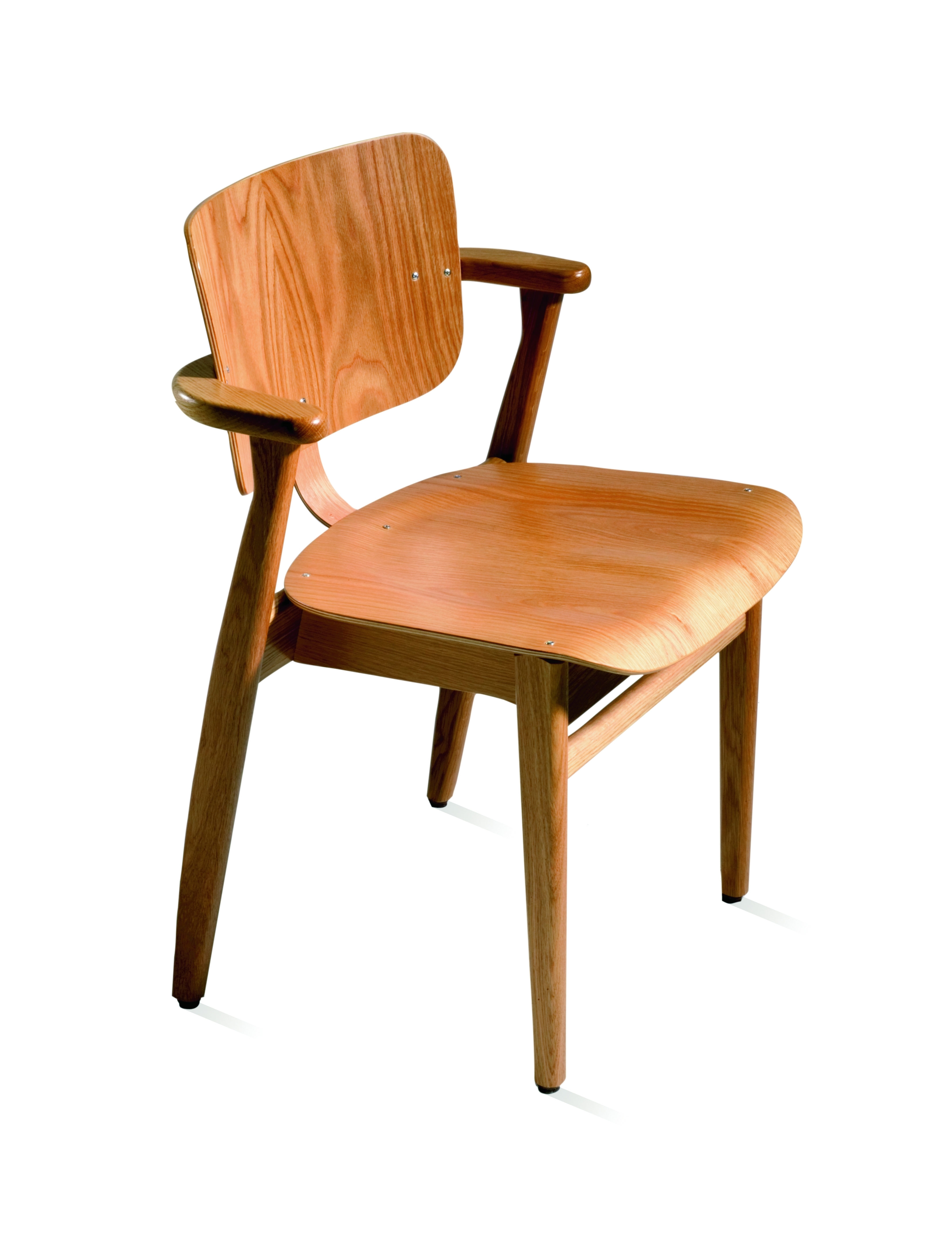
ARTEK Domus, Text by 2011 Tiina Alvesalo, Photo Artek

Artekin tuoteperhe kasvoi viime vuonna, kun Ilmari Tapiovaaran suunnittelemat tuotteet tulivat osaksi sen valikoimaa. Artek panostaakin nyt Tapiovaaran maailmalla eniten myydyimmän tuolin – Domuksen esittelyyn.

Huonekalumuotoilija ja sisustusarkkitehti Ilmari Tapiovaara (1914-1999) oli pohjoismaisen modernismin, paremman arjen ja kestävän kehityksen pioneeri.

Tapiovaara oli hyvin poikkeuksellinen suomalainen. Hän matkusti parikymppisenä opiskelijana Eurooppaan ja Pariisiin. Hän oli kosmopoliitti, joka pyrki kansainvälistymään varhaisessa vaiheessa.

Alvar Aallon jälkiä seuraten hän tavoitteli suunnittelussa humaania asuin- ja työympäristöä. Vuonna 1946 Ilmari Tapiovaara saivat tehtäväkseen suunnitella Domuksen opiskelija-asuntolan sisustuksen, jonka keskeisenä elementtinä oli hyvä lukutuoli, joka palveli myös yleistuolina.

Tapiovaaran filosofian mukaan muotoilun tehtävä oli parantaa ihmisten arkea ja edistää demokratiaa yhteiskunnassa. Domus oli ensimmäinen moderni tuoli, joka toimii niin julkisissa kuin yksityisissä tiloissa. Domuksen runko on massiivikoivua ja istuimen selkänoja puristettua vaneria. Sen tärkein ominaisuus on pinottavuus. Domuksen käsinojat ovat lyhyet, mutta riittävät hyvin tukemaan käsiä lepoasennossa.

Domus–tuolin muotokielessä näkyy se, että materiaaleista oli pula toisen maailmansodan jälkeen, jolloin materiaalien niukkuus palveli myös muodon niukkuutta. Tapiovaara osoitti kuitenkin Domuksen suunnittelussa, että kaikki ratkaisut olivat loppuun saakka tarkkaan mietittyjä.

Domuksesta tuli valtava menestys ja koko Tapiovaaran myöhäisemmän tuotannon punainen lanka. Tuolia on myyty miljoonia kappaleita koteihin ja julkisiin tiloihin. Amerikassa Domus tunnetaan myös nimellä Finnchair. Domus oli jo ikoni syntyessään.

Domusta on saatavan eri väreissä, puulajeissa ja verhoiluvaihtoehdoissa. Tuoteperheeseen kuuluu myös Domuksen lounge -versio.

Teksti: Tiina Alvesalo